
Scar Rupture & VBAC
What is a scar rupture?
(Also called uterine rupture)
A scar rupture is when your uterus beings to open along, or near to your internal scar from your previous caesarean.
It's widely touted as there being a 0.5% chance of to happening during a VABC, or 1:200. So thats also 99.5% not happening in your labour.
Its also important to know that the 0.5% figure includes all scar ruptures. So it includes inductions, ruptures when there is no previous caesarean, or from other types of surgery. This figure also includes data from a cross the world - its worth knowing that some countries have a higher rate of rupture to the UK due to the more routine use of Pitocin. The UK rupture rate is most likely lower that 0.5%.
Certain types of induction raise the risk of rupture to around 1.5-3%
Therefore if you are having a spontaneous labour (no induction or "help" from the drip) then your risk of having a scar rupture is actually lower than 0.5% after one previous C- Section.
What happens in a uterine rupture?
Drs havn’t even entirely agreed what exacty IS a rupture.
Everyone agrees all three layers of the uterus opening/parting is a rupture, but many women & birthing peeps are told they had a small “window” appear, or whats called dehiscence, one or two layers may have parted. Some dr’s class this as a rupture and some don’t. This means that the data may be higher or over inflated (meaning a true rupture is even more unlikely)
There is a school of thought that dehiscence could actualy be fairly common, or at least not problematic, and that we just don’t know about it unless a ceasarean is performed. So to include it in ruptures could be over inflating the stats.
Now, within ruptures there are different grades. A “catastophic rupture” is the most serious, and a true medical emergency.
A catastrophic Rupture accounts for about 6% of ruptures. (so 6% of the 0.5% rate of VBAC’s - so its really small.)
That is not to diminish the seriousness of a rupture because it is a serious medical emergency.
However other things which are also considered a medical emergency in birth carry a higher risk - eg cord prolapse or placental abruption. (both around 1-5% of all pregnancies) and these are not a risk for which we are guided down a high risk pregnancy route for, without additional factors.
Risk is personal
By that I mean for some people a risk of less than 99.5% chance of something not happening is not a concern at all, but for others that may still feel too high. Only you can decide what feels right for you.
NHS Recommendations
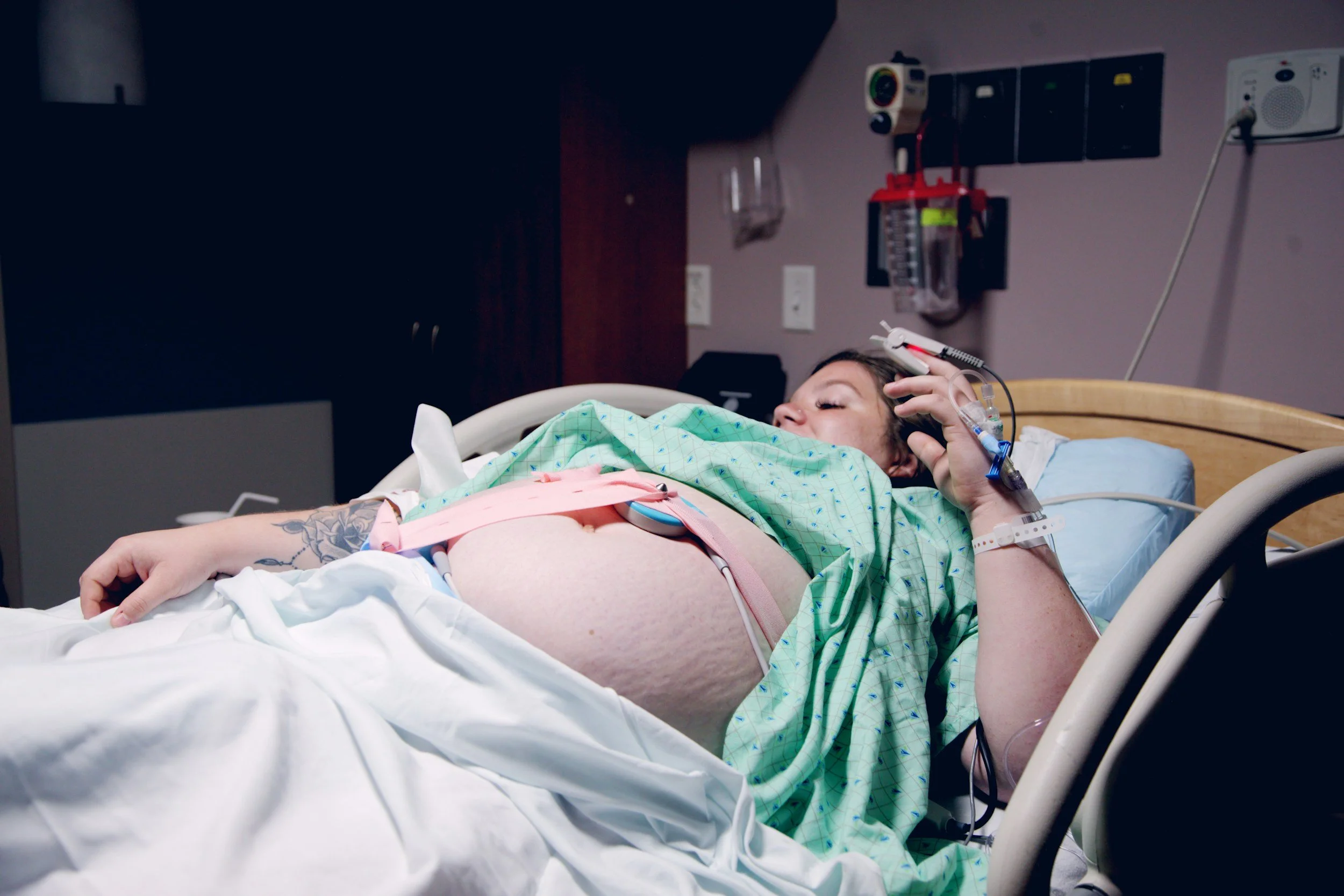
If you are birthing within the NHS their guidelines say you should have CTG monitoring. That is the bands around your tummy holding discs in place to detect your babies heart rate which reads to a machine.
You may be told this can detect a rupture or will help keep your baby safe.
Unfortunately neither of these are true.
There is not one bit of evidence that CTG helps improve outcomes for VBAC nor that it can prevent poor outcomes. Even the ROOG guidelines rate this recommendation as “D” (with A being for solid evidence)
However CTG has been shown in many many studies to increase the rate of unplanned caesareans through the over diagnosis of fetal distress. In fact it's believed to increase the rate of an unplanned Caesarean by 20%.
Personally I find that pretty wild that a cornerstone of the VBAC guidelines increases your chance of needing another Caesarean by 20%.
This happens because the baby is incorrectly believed to be distressed and a caesarean is performed, and the baby turns out to be fine.
A scar rupture cannot be diagnosed from CTG.
CTG is studying babies heartrate, on a basic level it can tell us that baby’s heart is beating, and the pattern, but not that your uterus is rupturing or not.
Scar rupture has many signs (read to the end!) and most of those are best observed directly, not from a machine.
Your instinct is key
That is not to say there isn’t signs which may be present on CTG -but that concerning trends seen on CTG can be misdiagnosed as a rupture.
Equally if you are having CTG monitoring and you feel something is off, speak up - dont assume it would be picked up by CTG. Your instincts are often incredibly accurate & valuable.
More information from the leading research Obstetric Dr on CTG - Dr Small here
Disadvantages of CTG monitoring
CTG often resricts movements, even with wireless monitors (due to them loosing trace)
Freedom of movement, and being upright is really helpful for your baby to navigate your pelvis, for your pelvis to open, and for your own comfort. Its also been shown to reduce the length of labour and reduce tears
You may end up laid on the bed even if you didn’t intend to, raising the chance of tears, assisted delivery & haemorrhage
It is known to increase the CS rate.
Advantages of CTG monitoring
Some people DO feel reassured to know their baby is being monitored constantly, and it makes them feel safer and therefore more relaxed.
If you have your labour augmented, or an induction, when your baby is more likely to become distressed, CTG can be helpful to detect this (though again false positives are very frequent)
Where is CTG offered?
CTG is only available in a labour ward (not at home or a birth centre) so if you do want to have CTG your labour would need to be on the main labour ward.
Its worth noting there are much higher sucess rates for VBAC in the home and birth centre settings, so its worth considering that in your decision making process as well.
It will be offered as standard, and on a labour ward it maybe assumed you will accept - if this isn't part of your plan you will need to make that very clear fron the outset & ensure your partner is on board to help advocate.
Scar Rupture and VBAC - what are the signs?
Signs of rupture for you:
Scar pain, described as searing, burning, ripping, different to contractions & lasting between contractions
Profuse bleeding from the vagina
Shoulder tip pain
Maternal shock
A feeling of doom (just knowing something isnt right)
Contractions suddenly stop or weaken
Rapid drop in blood pressure, and rise in heart rate.
Signs of rupture for your baby:
Abnormal heart rate, eg not recovering after a contraction. Heart rate may be slow or fast. (Be aware changes in babies heart-rate can also indicate many other things also, hence why CTG can’t diagnose a rupture.)
A baby that had been visible & descending suddenly retracting. (loss of fetal station) Or this may be observed via a vaginal exam.
Is scar pain the best sign of scar rupture and VBAC?
This is a tricky subject - pain in your scar should not be ignored.
However all pain in that area is not sinister.
Other causes of scar pain could be: scar tissue or adhesions being moved or even torn during contractions. Baby could be in a difficult position pressing on nerves.
In labour there is a LOT of sensations, and as your baby navigates your pelvis there can be some very intense sensations in this area, though not specifically your scar.
You are the authority of your body and in most circumstances you will just know something isnt right - your intuition is very important.
There have been very rare cases of “silent rupture” where the mum has insisted something isnt right and in theatre a rupture has been discovered. However these cases are incredibly rare.
As outlined above in most cases there are lots of symptoms.
Key takeaway:
Scar rupture is for many a big worry - SO knowing there are quite a few fairly major signs can be reassuring. Your care givers will be looking out for them too.
However while a serious emergency the risk is very small - so you may decide that a home birth or birth centre birth has enough benefits to outweigh the extra distance from a theatre.
I would also gently suggest that after you are happy you are familiar with any signs of scar rupture, that you will be far better using your precious energy to focus on how you can make your birth the best possible experience this time - lead from a place of hope & trust, not from a place of fear.
What to learn more?
Take a look through my VBAC Library - a wonderful collection of recourses to help you as you plan your VABC. I also have a VBAC doula package - virtual support throughout your pregnancy, helping you make sense of your options and plan for your best birth.